Do you need planning permission for a pergola in Ireland?
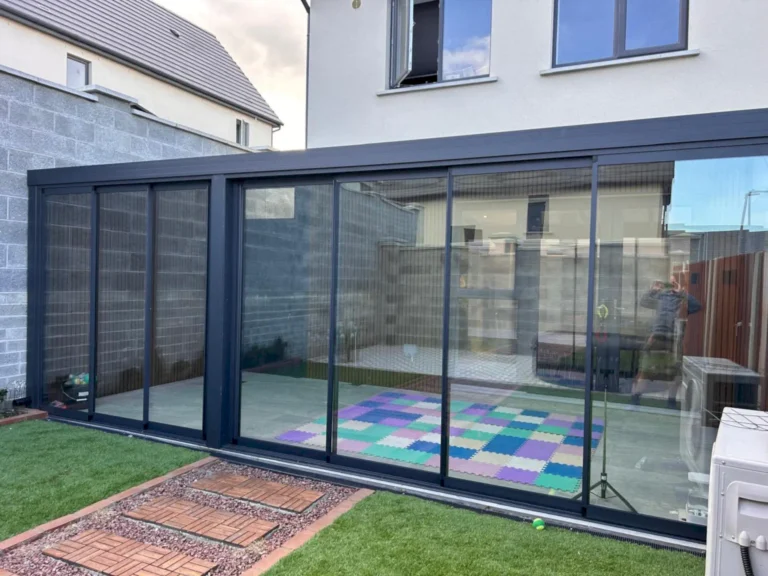
It is the first question almost everyone asks, and the honest answer is that it usually does not, but the exemption depends on details that are easy to get wrong.
The short version
Ireland has a set of exempted development rules that let you build certain structures at the rear of a house without applying for planning permission. Most garden pergolas and verandas fall inside them. What decides it is not what you call the structure, it is the floor area, the height, where it sits relative to your boundaries, and how much of your garden is already built on.
The four things that actually decide it
1. Total floor area of everything at the rear
The allowance is cumulative. A shed you put up ten years ago, a previous extension and the new structure are added together. People come unstuck here more than anywhere else, because they only think about the thing they are building now.
2. Height
Flat-roofed structures are allowed less height than pitched ones. This is normally not a problem in a garden, but it matters if you want the structure to clear a set of patio doors with a step down.
3. Private open space left over
You have to leave a minimum amount of open garden behind the house. In a small urban garden this is the rule that bites, not the floor area.
4. Whether it is at the front
Anything forward of the front wall of the house is a different conversation and usually does need permission.
Where people get caught out
- Enclosing it later. An open pergola and a fully glazed room are not the same thing in planning terms. If you think you might glaze it in two years, ask now, not then.
- Protected structures and ACAs. If the house is a protected structure or sits in an Architectural Conservation Area, the exemptions largely stop applying.
- Estate covenants. These are not planning law, but a management company can still object, and that is a separate headache.
What we do about it
At the survey we measure what is already there, work out where you stand against the exemptions and tell you plainly what we think. That is our opinion based on the structures we have fitted. It is not a certification, and it does not transfer the responsibility to us.
If it is borderline, the safe move is a declaration of exemption from your local authority under Section 5 of the Planning and Development Act. It costs a fee, it takes a few weeks, and it gives you something in writing.
Confirm the current figures with your own local authority before you commit. The regulations get amended, and the limits that applied to your neighbour three years ago may not be the ones that apply to you.
Get a free quote.
Half an hour, no obligation, and a fixed price in writing afterwards.